
WaSH
🚰
WaSH
🧼
WaSH
🚻
WaSH 🚰 WaSH 🧼 WaSH 🚻
California’s First Water, Sanitation, and Hygiene (WaSH) Standards
This webpage summarizes California’s first Water, Sanitation, and Hygiene (WaSH) standards that set a foundation to ensure people experiencing homelessness have access to essential water, sanitation, and hygiene services, supporting both immediate needs and long-term solutions while upholding health and dignity. To learn more about how these guidelines can help your community in detail. Click the button below to view a preliminary draft of the SDSU PSJ WaSH report – the perspectives contained in the report are those of the PSJ research team only and do not necessarily reflect the views of any of our funders.
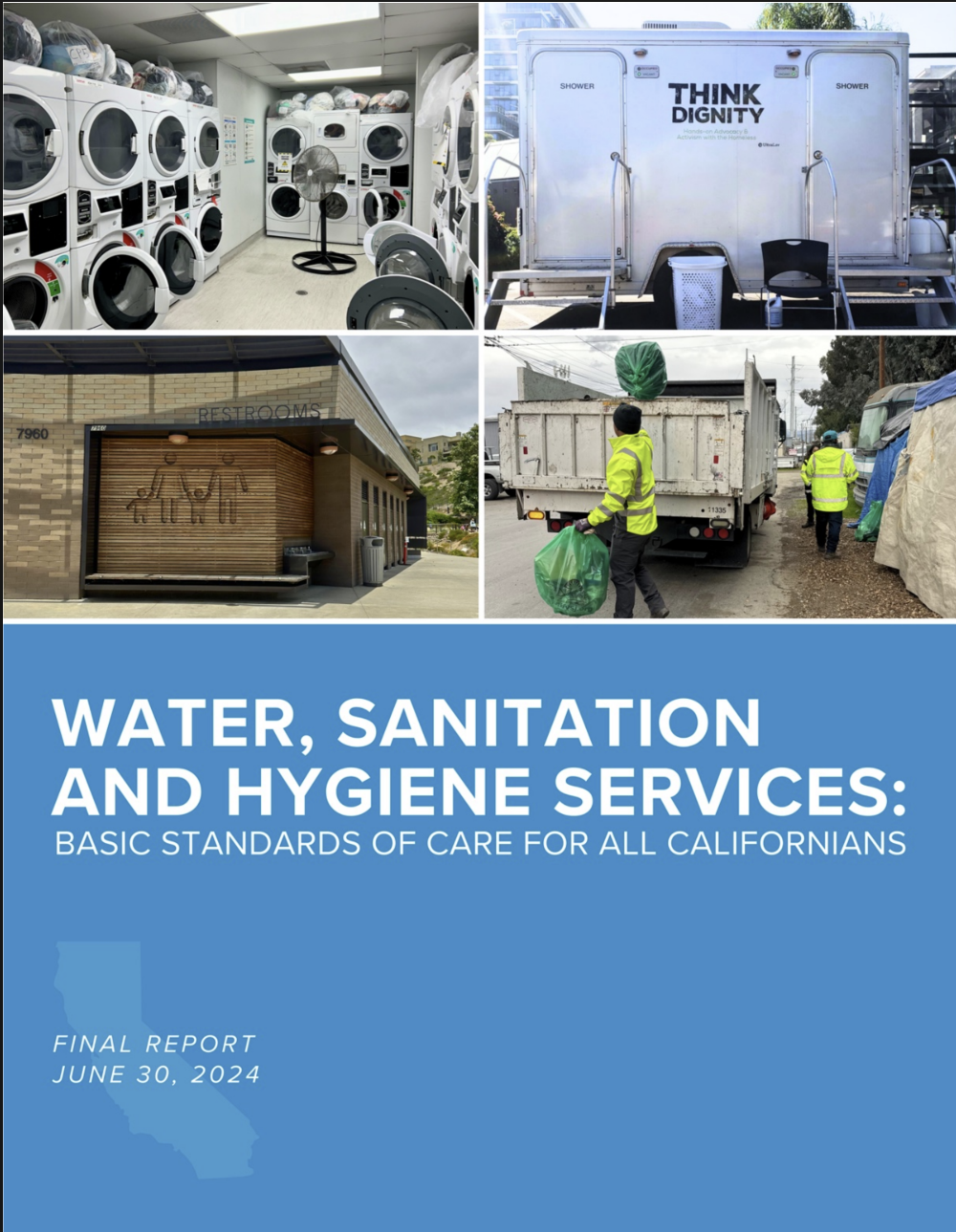
Executive Summary
This document is California’s first set of standards for Water, Sanitation, and Hygiene (WaSH) services for people experiencing homelessness. It aims to ensure everyone—no matter where they live—can access clean water, toilets, handwashing, showers, menstrual hygiene, laundry, and trash disposal. The document guides communities on how to allocate resources for both quick fixes and long-term solutions, recognizing that while housing is the ultimate goal, immediate access to WaSH services is essential for health and dignity. By improving WaSH access, we can protect public health, support dignity, and meet urgent daily needs for those waiting for housing and for all Californians.
WaSH Advocacy: Key Messages
Access to Water, Sanitation, and Hygiene (WaSH) is crucial for health and dignity. This applies not just to those in need but to all Californians.Consistent access to WaSH saves money long-term. It cuts down on law enforcement costs and reduces spending on cleanup. It also helps prevent the spread of diseases that affect everyone, no matter their economic status.
“Nobody wants to go behind a parked car or in “We do $10 for every person that helps.… [clean up] it’s expensive but how much are you saving in the long run? I’m…thinking disease transmission, complaints, law enforcement getting involved.”
“I think we should ask everyone to…envision having to go to the bathroom but not having…immediate access…and how long they’re expected…to hold it….”
“…we are working on an approach here that is trying to treat everybody – how they deserve to be treated, basically. And…try to make the community safe…”
“Members of the public will go by and use them too…I see,…truck drivers…pull over, [to] use [the] portable toilet…”
“Street cleaning requests have gone down around [toilets]. Neighborhood livability. Less poop and pee on the streets makes things more livable. Also gives folks opportunities to do more stuff… to be out and about.”
“We could just say we’re the city that offers trash collection to… every single one of our community members…and that way we keep our city sparkling clean.”

Conclusion
Many unhoused Californians in the state currently have less access to water, sanitation, and hygiene (WaSH) services than is considered acceptable—even below what is required in international emergency situations. Expanding WaSH access promotes dignity, health, and safety for everyone, and the report calls on California to recognize sanitation and hygiene as essential human rights, just like access to water.
Your Guide to WaSH Resources
Learn how improving access to water, restrooms, trash disposal, handwashing, showers, menstrual hygiene, and laundry services can transform the lives of unhoused Californians and build healthier communities for all. Each resource provides immediate relief while supporting dignity, public health, and long-term solutions. Click on a topic below to discover more.
-
Learn how providing bottled water and 24/7 public water access supports unsheltered Californians.
-
Discover how expanding access to clean, safe public restrooms can improve health and dignity for all Californians.
-
Discover how expanded trash services for unsheltered Californians can help build cleaner, safer, and healthier communities.
-
Discover how reliable access to water, soap, and plumbing helps stop the spread of diseases such as Hepatitis A.
-
Discover how mobile showers and community facilities provide safe, dignified access to essential hygiene for Californians experiencing homelessness.
-
Discover how providing free menstrual products and clean facilities supports vulnerable unsheltered people who menstruate.
-
Discover how clean clothes can improve health, dignity, and job opportunities for unsheltered individuals.